

When we talk about First Come First Serve, we mean a simple rule: whoever comes early gets the chance first. It is often used in jobs, ticket booking, schools, events, and online systems. In easy words, it is a queue-based priority system where time decides your turn.
In this guide, you will learn 30+ natural and real-life alternatives for First Come First Serve, so you can improve your English vocabulary, writing, and communication skills in a more confident way.
Read More: Other Ways to Say “Happy Anniversary”
What Does “First Come First Serve” Mean?
“First come first serve” means whoever arrives or applies first will get the service, item, or opportunity first. It is a simple fair allocation system based on order of arrival and not on selection or preference. Once the limited availability is full, others may not get access.
This concept is widely used in event management, ticket booking, online registration, and limited offers. It helps create clear structure, improves queue management, and ensures equal treatment for everyone.
When to Use “First Come First Serve”
Use “first come first serve” when there is limited capacity and you want to give priority based on time of arrival. It is commonly applied in registrations, event entry, seat booking, product launches, and promotional campaigns. This system is useful when demand is high and decisions must be made quickly. It also creates urgency marketing, encouraging users to act fast to secure their spot or offer.
Is It Professional or Polite to Say “First Come First Serve”?
Yes, it is generally considered professional communication and is widely used in business emails, official notices, and corporate announcements. It is polite because it follows a neutral selection policy and treats everyone equally.
However, the more formal and grammatically correct version is “first come, first served basis”, which is preferred in formal writing, legal documents, and official policies. In most workplaces and marketing messages, both versions are acceptable and clearly understood.
Alternatives for “First Come First Serve“
- First in line, first served
- Early arrival gets priority
- Serve in order of arrival
- Queue-based system
- Order of arrival rule
- Priority by time
- Early bird gets the chance
- Time-based service
- First arrived, first served
- Chronological order service
- Arrival-based selection
- Serve as you come
- Walk-in priority system
- Open queue system
- No reservation priority
- First registered, first served
- Entry order system
- Live queue rule
- Straight queue service
- Arrival sequence rule
- First access rule
- Order matters system
- Simple queue rule
- Turn-based entry
- First available gets served
- Queue order priority
- Time queue system
- Attendance order rule
- First check-in first served
- Rolling queue system
- Entry time priority
- Fair queue system
- Non-reserved system
- Open entry rule
- Walk-in order service
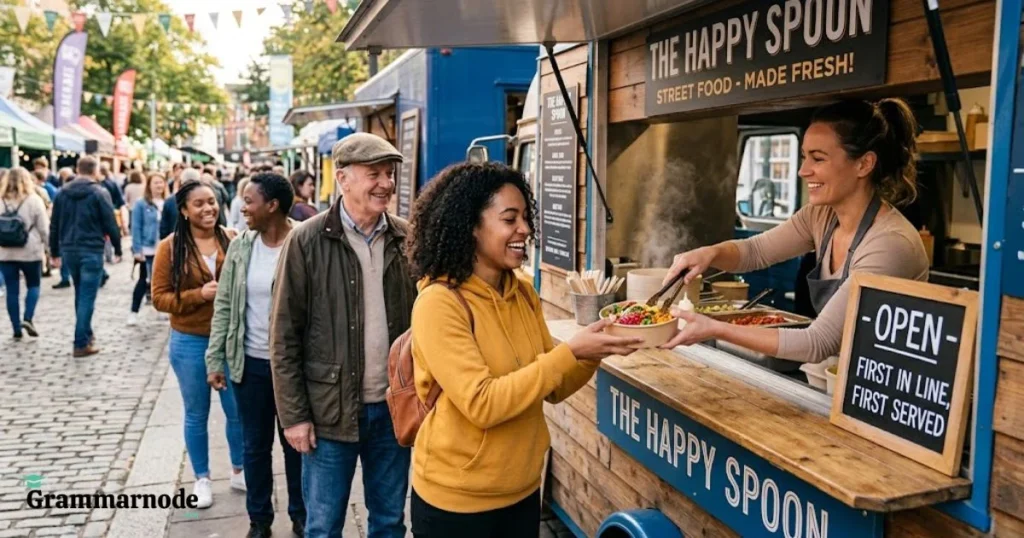
1. First in line, first served
Explanation:
This phrase means the person who stands first in the line will be served first. It is one of the closest meanings to First Come First Serve and is very common in daily life.
Usage Examples:
- Tickets are given on a first in line, first served basis.
- Shopping discount applies first in line, first served.
- Exams registration works first in line, first served.
- The clinic follows the first in line, first served rule.
- Food stalls use a first in line, first served method.
When to Use: Use it in daily speaking, queues, or service situations.
When NOT to Use: Avoid in formal legal or technical documents.
2. Early arrival gets priority
Explanation:
This means the person who arrives early will get preference over others. It highlights timing and fairness.
Usage Examples:
- Seats are given on an early arrival priority basis.
- Job interviews follow the priority rule.
- Event entry uses early arrival priority.
- Hospital tokens following early arrival gets priority.
- Parking works on early arrival gets priority.
When to Use: Use in events, services, and scheduling systems.
When NOT to Use: Not suitable for strict legal wording.
3. Serve in order of arrival
Explanation:
This means people are served exactly in the sequence they arrive. It is very structured and fair.
Usage Examples:
- Patients are served in order of arrival.
- The bank follows serve in order of arrival.
- Tickets are given in order of arrival.
- The office uses serve in order of arrival system.
- The cafeteria works in order of arrival.
When to Use: Best for formal service systems.
When NOT to Use: Not for casual conversations.
4. Queue-based system
Explanation:
This refers to a system where people stand or wait in a queue, and service is given one by one.
Usage Examples:
- The hospital uses a queue-based system.
- The ticket counter runs on a queue-based system.
- The bank uses a queue-based system.
- Government offices follow a queue-based system.
- The shop has a queue-based system.
When to Use: Use in structured service environments.
When NOT to Use: Avoid informal speech.
Related Post: Other Ways to Say “God Bless You”
5. Order of arrival rule
Explanation:
This means the order in which people arrive decides their turn.
Usage Examples:
- Seats are given by order of arrival rule.
- Registration follows the order of arrival rule.
- Entry is based on the order of arrival rule.
- Tickets follow the order of arrival rule.
- The clinic uses the order of arrival rule.
When to Use: Use in instructions and guidelines.
When NOT to Use: Not for emotional or creative writing.
6. Priority by time
Explanation:
This phrase means time decides who gets service first.
Usage Examples:
- Service is given priority by time.
- Booking follows priority by time.
- Entry works on priority by time.
- Seats are assigned by priority by time.
- Support is given priority by time.
When to Use: Use in digital systems and scheduling.
When NOT to Use: Not for casual speaking.
7. Early bird gets the chance
Explanation:
A friendly phrase meaning people who come early get the benefit.
Usage Examples:
- Early birds get the chance for a discount.
- Early birds get the chance for seats.
- Early birds get the chance for tickets.
- Early birds get the chance for offers.
- Early birds get the chance for registration.
When to Use: Use in marketing and promotions.
When NOT to Use: Not suitable for strict official policies.
8. Time-based service
Explanation:
Service is given based on time of arrival.
Usage Examples:
- The clinic uses a time-based service.
- The office runs a time-based service.
- The bank uses time-based service.
- The ticket counter follows a time-based service.
- The help desk uses time-based service.
When to Use: Use in systems and processes.
When NOT to Use: Not for storytelling.
9. First arrived, first served
Explanation:
Same idea as FCFS, focusing on arrival time.
Usage Examples:
- Seats are first arrived, first served.
- Tickets are first arrived, first served.
- Entry is first arrived, first served.
- Registration is first arrived, first served.
- Booking is first arrived, first served.
When to Use: Use in event systems.
When NOT to Use: Avoid formal legal writing.
See Also: Other Ways to Say “For the First Time”
10. Chronological order service
Explanation:
Service is given based on exact order of time.
Usage Examples:
- Patients are treated in chronological order service.
- Tickets follow chronological order service.
- Queue works in chronological order service.
- The office uses chronological order service.
- The system runs chronological order service.
When to Use: Use in formal or technical systems.
When NOT to Use: Not for casual speech.
11. Arrival-based selection
Explanation:
This means selection depends on who arrives first. It is a fair and simple system where timing matters most.
Usage Examples:
- Seats are given through arrival-based selection.
- Event entry uses arrival-based selection.
- Tickets follow arrival-based selection.
- Registration works on arrival-based selection.
- The office queue uses arrival-based selection.
When to Use: Use in event rules or booking systems.
When NOT to Use: Avoid emotional or storytelling writing.
12. Serve as you come
Explanation:
A very simple phrase meaning people are served in the order they come in.
Usage Examples:
- Customers are served as you come.
- The clinic works to serve as you come rule.
- Food stalls serve as you come.
- Banks serve as a system.
- The office follows serve as you come policy.
When to Use: Use in informal explanations.
When NOT to Use: Not suitable for formal documents.
13. Walk-in priority system
Explanation:
Walk-in customers or visitors are served based on arrival time without booking.
Usage Examples:
- The hospital uses a walk-in priority system.
- The salon follows a walk-in priority system.
- The clinic works on a walk-in priority system.
- The store uses a walk-in priority system.
- Event entry uses a walk-in priority system.
When to Use: Use in service industries.
When NOT to Use: Not for reserved or appointment-based systems.
14. Open queue system
Explanation:
Everyone joins a visible queue and waits for their turn.
Usage Examples:
- The bank uses an open queue system.
- The ticket counter runs an open queue system.
- The hospital uses an open queue system.
- The office follows an open queue system.
- The help desk uses an open queue system.
When to Use: Use in structured public services.
When NOT to Use: Not for private booking systems.
15. No reservation priority
Explanation:
People without booking are served based on arrival order.
Usage Examples:
- Seats are given under no reservation priority.
- The clinic uses no reservation priority rule.
- Entry follows no reservation priority.
- Tickets work on no reservation priority.
- The service uses no reservation priority system.
When to Use: Use when explaining walk-in rules.
When NOT to Use: Avoid when reservations are required.
Related Post: Other Ways to Say “Good Communication Skills”
16. First registered, first served
Explanation:
The person who registers first gets service first.
Usage Examples:
- Course seats are first registered, first served.
- Workshop follows first registered, first served.
- Event entry uses first registered, first served.
- Tickets are first registered, first served.
- Programs use first registered, first served.
When to Use: Use in online or form-based systems.
When NOT to Use: Not for physical queues.
17. Entry order system
Explanation:
Service depends on the order in which people enter.
Usage Examples:
- The stadium uses an entry order system.
- The office follows an entry order system.
- The event uses an entry order system.
- The school gate uses an entry order system.
- Hall works on an entry order system.
When to Use: Use in controlled entry places.
When NOT to Use: Not for digital bookings.
18. Live queue rule
Explanation:
A real-time queue where people are served as they move forward.
Usage Examples:
- The bank uses a live queue rule.
- The hospital follows a live queue rule.
- The ticket counter uses a live queue rule.
- Help desk works on live queue rule.
- The office uses a live queue rule.
When to Use: Use in digital token systems.
When NOT to Use: Not for offline static systems.
19. Straight queue service
Explanation:
People are served in a straight, simple order without skipping.
Usage Examples:
- The clinic uses a straight queue service.
- The bank follows straight queue service.
- The office uses straight queue service.
- The ticket counter runs straight queue service.
- The store uses straight queue service.
When to Use: Use in fair service rules.
When NOT to Use: Not for VIP or priority systems.
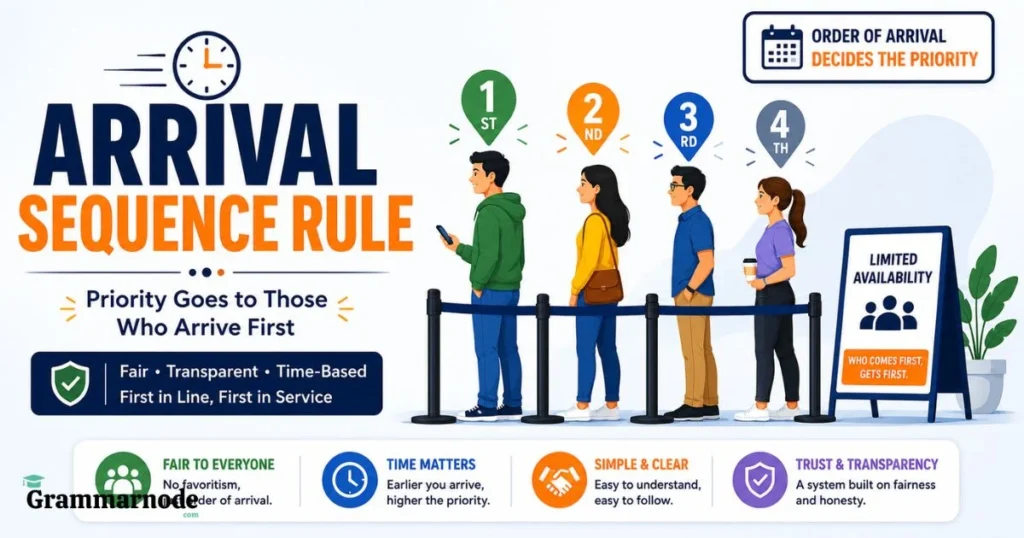
20. Arrival sequence rule
Explanation:
Service is based on the exact sequence of arrival.
Usage Examples:
- Seats follow the arrival sequence rule.
- Registration uses the arrival sequence rule.
- Tickets follow the arrival sequence rule.
- The office uses the arrival sequence rule.
- The clinic works on arrival sequence rules.
When to Use: Use in structured systems.
When NOT to Use: Avoid in casual speech.
21. First access rule
Explanation:
The first person to access a service gets priority.
Usage Examples:
- Online booking uses the first access rule.
- Tickets follow the first access rule.
- Entry works on the first access rule.
- Registration uses the first access rule.
- The system follows the first access rule.
When to Use: Use in digital platforms.
When NOT to Use: Not for physical queues.
Read More: Other Ways to Say “Have Fun”
22. Order matters system
Explanation:
The order in which people come is important for service.
Usage Examples:
- Queue follows order matters system.
- Tickets use an order matters system.
- Entry works on the order matters system.
- The office uses an order matters system.
- The clinic follows an order matters system.
When to Use: Use in rule-based systems.
When NOT to Use: Not for informal talk.
23. Simple queue rule
Explanation:
A basic system where people are served one by one.
Usage Examples:
- The bank uses a simple queue rule.
- The office follows a simple queue rule.
- The clinic uses a simple queue rule.
- The ticket counter runs a simple queue rule.
- The store uses a simple queue rule.
When to Use: Use in easy explanations.
When NOT to Use: Avoid technical writing.
24. Turn-based entry
Explanation:
Each person gets their turn based on arrival.
Usage Examples:
- Entry follows turn-based entry.
- The office uses turn-based entry.
- The clinic runs turn-based entries.
- Tickets use turn-based entry.
- Help desk follows turn-based entry.
When to Use: Use in queue systems.
When NOT to Use: Not for instant access systems.
25. First available gets served
Explanation:
The first free spot or service goes to the first person in line.
Usage Examples:
- Seats are first available and served.
- Tickets follow first available gets served.
- The clinic uses the first available food.
- Office work on first available gets served.
- Booking uses first available food.
When to Use: Use in flexible scheduling systems.
When NOT to Use: Not for fixed appointments.
26. Queue order priority
Explanation:
Priority is given strictly according to queue position.
Usage Examples:
- The bank uses queue order priority.
- Clinic follows queue order priority.
- The office uses queue order priority.
- Tickets follow queue order priority.
- The help desk uses queue order priority.
When to Use: Use in formal systems.
When NOT to Use: Not for VIP services.
27. Time queue system
Explanation:
A queue that works strictly based on time of arrival.
Usage Examples:
- The hospital uses a time queue system.
- The bank follows a time queue system.
- The office uses a time queue system.
- The ticket counter runs a time queue system.
- The help desk uses a time queue system.
When to Use: Use in organized service systems.
When NOT to Use: Not for informal usage.
28. Attendance order rule
Explanation:
Service depends on attendance order.
Usage Examples:
- Class follows the attendance order rule.
- The event uses the attendance order rule.
- The office uses an attendance order rule.
- The clinic follows the attendance order rule.
- The workshop uses an attendance order rule.
When to Use: Use in educational or event systems.
When NOT to Use: Not for online systems.
29. First check-in first served
Explanation:
The first person to check in gets served first.
Usage Examples:
- The hotel uses first check-in first served.
- Airport follows first check-in first served.
- The event uses first check-in first served.
- The clinic uses first check-in first served.
- The office uses first check-in first served.
When to Use: Use in travel or digital check-ins.
When NOT to Use: Not for pre-booked systems.
30. Rolling queue system
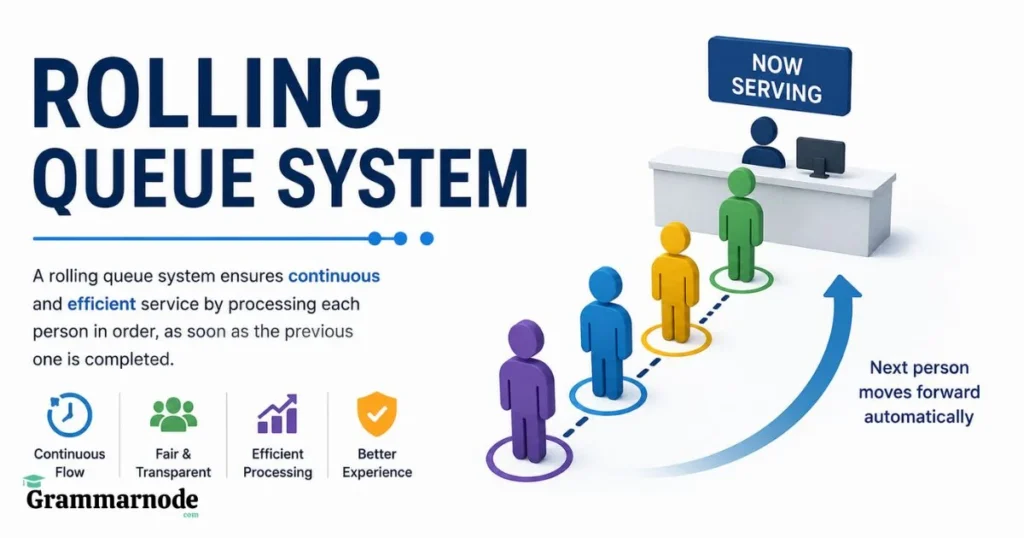
Explanation:
A moving queue where people are served continuously in order.
Usage Examples:
- The bank uses a rolling queue system.
- The clinic follows a rolling queue system.
- The office uses a rolling queue system.
- The help desk uses a rolling queue system.
- The ticket counter uses a rolling queue system.
When to Use: Use in high-traffic systems.
When NOT to Use: Not for fixed appointment setups.
31. Entry time priority
Explanation:
Priority is based on exact entry time.
Usage Examples:
- Seats follow entry time priority.
- Registration uses entry time priority.
- Tickets follow entry time priority.
- The office uses entry time priority.
- The clinic works on entry time priority.
When to Use: Use in digital systems.
When NOT to Use: Not for informal speech.
32. Fair queue system
Explanation:
A system designed to treat everyone equally based on arrival.
Usage Examples:
- The bank uses a fair queue system.
- The clinic follows a fair queue system.
- The office uses a fair queue system.
- Tickets use a fair queue system.
- The help desk runs a fair queue system.
When to Use: Use in ethical service systems.
When NOT to Use: Not for VIP-based services.
33. Non-reserved system
Explanation:
No booking required; service is based on arrival.
Usage Examples:
- The clinic uses a non-reserved system.
- The store follows a non-reserved system.
- Event uses a non-reserved system.
- The office uses a non-reserved system.
- Banks use a non-reserved system.
When to Use: Use in walk-in services.
When NOT to Use: Not for appointment systems.
34. Open entry rule
Explanation:
Anyone can enter, and service is given in order.
Usage Examples:
- The event uses an open entry rule.
- The office follows an open entry rule.
- The clinic uses an open entry rule.
- The store uses an open entry rule.
- The ticket counter uses an open entry rule.
When to Use: Use in public access systems.
When NOT to Use: Not for restricted entry places.
35. Walk-in order service
Explanation:
People are served based on walk-in arrival order.
Usage Examples:
- The clinic uses walk-in order service.
- Salon follows walk-in order service.
- The store uses walk-in order service.
- The office uses walk-in order service.
- The event uses walk-in order service.
When to Use: Use in real-life service places.
When NOT to Use: Not for pre-booked systems.
See Also: Other Ways to Say “I’m Happy for You” (With Examples)
36. First Come First Serve Meaning
Explanation:
“First come first serve” means the people who arrive or apply first will get the service, offer, or item before others. It is based on time order and fairness. It is commonly used in events, sales, and bookings.
Usage Examples:
- Seats are given on a first come first serve basis
- The tickets will be distributed first come first serve
- Parking is available first come first serve
- Free samples are given first come first serve
- The offer works on first come first serve rule
When to Use: Use it when access depends on who arrives first.
When Not to Use: Avoid it when selection is based on qualification or approval.
37. 1st Come 1st Serve
Explanation:
“1st come 1st serve” is a shortened informal version of the same rule. It is often used in casual writing, posters, and online posts to save space while keeping the meaning clear.
Usage Examples:
- Entry is 1st come 1st serve
- Free gifts are 1st come 1st serve
- Seats available 1st come 1st serve
- Discount items 1st come 1st serve
- Registration is 1st come 1st serve
When to Use: Use it in informal ads, social media posts, and notices.
When Not to Use: Avoid it in formal documents or professional reports.
38. First Come First Serve Synonym
Explanation:
“First come first serve synonym” refers to alternative phrases that express the same idea of priority based on arrival or order of application. These synonyms are useful in formal writing and communication.
Usage Examples:
- First come first served basis
- Priority by arrival
- Order of arrival applies
- Queue based allocation
- Early applicants get priority
When to Use: Use it when you want to avoid repeating the same phrase.
When Not to Use: Avoid it when the rule is not strictly time based.
39. First Come First Serve or Served
Explanation:
The correct common phrase is “first come first served” which means the first people to arrive will be served first. The word “served” is grammatically more correct in formal usage.
Usage Examples:
- Seats are given first come first served
- Tickets are sold first come first served
- Lunch will be served first come first served
- Entry is first come first served
- Offers are given first come first served
When to Use: Use “first come first served” in formal writing and correct grammar.
When Not to Use: Avoid using “serve” alone in formal contexts.
40. First Come First Serve in Email
Explanation:
In emails, “first come first serve” is used to explain that requests or registrations will be handled in order of arrival. It is commonly used in business communication, event invitations, and announcements.
Usage Examples:
- Registration will be accepted on a first come first served basis
- Seats are limited and will be assigned first come first served
- Applications will be processed first come first served
- The offer is available first come first served
- Workshop entry is first come first served
When to Use: Use it in professional emails, announcements, and notices.
When Not to Use: Avoid it when selection depends on eligibility or approval.
Read More: Ways to Say “No Way” (With Examples)
41. First Come, First Served Basis
Explanation:
“First come, first served basis” means people are handled in the order they arrive or apply. It is widely used in formal writing and business communication to explain fair allocation.
Usage Examples:
- Seats are allocated on a first come, first served basis
- Tickets are distributed on a first come, first served basis
- Parking is available on a first come, first served basis
- Registrations are accepted on a first come, first served basis
- Discounts are given on a first come, first served basis
When to Use: Use it in official notices, business emails, and announcements.
When Not to Use: Avoid it when availability is not limited or time based.
Conclusion
Understanding First Come First Serve (FCFS) and its many alternatives helps you speak and write English in a more natural and professional way. If you use phrases like queue-based system, early arrival priority, or order of arrival rule, all these expressions carry the same simple idea, whoever comes first gets served first.
These synonyms are not just vocabulary upgrades; they improve your communication in real-life situations like offices, schools, hospitals, and online booking systems. Using the right phrase also makes your writing clearer, more engaging, and easier to understand for readers.
So, the next time you talk about a fair queue system or time-based service, you’ll sound more confident and precise. Keep practicing these terms, and your English communication skills will naturally become stronger and more impactful in both writing and speaking.
FAQs About Other Ways to Say “First Come First Serve“
1. What are other ways to say First Come First Serve?
Other ways include first in line first served, queue-based system, arrival order rule, time-based service, and walk-in priority system. All these phrases mean the same idea, people are served based on who arrives first.
2. When should I use First Come First Serve alternatives?
You can use these alternatives in offices, events, hospitals, online booking systems, and customer service rules. They are helpful when you want your writing to sound more professional and less repetitive.
3. Is First Come First Serve the same as the queue system?
Yes, both are closely related. A queue system is a structured line where people are served in order, which is exactly what First Come First Serve (FCFS) means in practice.
4. What is a simple synonym for First Come First Serve?
A simple synonym is “first in line, first served.” It is widely used in daily English and is easy to understand even for beginners.
5. Why is First Come First Serve important in real life?
It is important because it ensures fairness. Everyone gets an equal chance based on arrival time, which is why it is commonly used in banks, clinics, ticket counters, and online systems.
6. How to say first come first serve?
You can say “first come, first served” or “first come first served basis”. It means people are served in order of arrival, and the one who comes first gets priority. It is commonly used in tickets, events, and registrations.
7. What can I say instead of first come first serve?
You can use “order of arrival”, “priority by arrival”, or “early applicants first”. These are simple alternatives used in emails, notices, and business communication to explain the same rule in a clear way.
Related Post: